Hammers and Nails

“Sometimes you’re the hammer, and sometimes you’re the nail.”

Everybody who trains in Brazilian Jiujitsu gets it. There are those days when everything “clicks.” Our defense seems impenetrable, and our offense unstoppable. We are the hammer. Then there are those days when nothing seems to work. Our opponents pass our guard like the proverbial hot knife through butter, and we spend the day on the run, while fine-tuning our arsenal of various tap-outs. We are the nail.

This is the nature of Jiu Jitsu: we are continually pushing our limits, as we work to build a better, stronger self. In order to improve, we need to fine-tune our strengths and improve our weaknesses; we need strong partners to train with and put those skills to the test. Just as one needs both a hammer AND nails to build a house, we need to experience the full spectrum of training in order to build ourselves.

We learn to rejoice in our victories with a bit of gratitude and humility, while we accept our defeats with an appreciation for the learning opportunity it provides. In this regard, BJJ is analogous to our daily lives, in which we will experience both success and failure. We should enjoy the rewards of our successes, while being grateful for the people and circumstances that helped us get there. On the flip side, it’s important to remember that we can survive those times when things don’t go as planned; even when it seems our life is in a shambles, we can not only survive, but come out stronger. Often these lessons are the most empowering of all.

Whether you’re the hammer or the nail, embrace the grind. We’ll all be that much better because of it.

See you on the mat.

What Can You Do?

John F. Kennedy’s inaugural address is a highly motivational piece of our American history which you should read here: jfklibrary.org. (or watch it here) His is a great manifesto of Strength and Honor, praising the value of standing up for what’s right, even in the face of adversity. Perhaps the most well-known part of his speech is our focus this week.

And so, my fellow Americans: ask not what your country can do for you – ask what you can do for your country.

-John F. Kennedy

This admonishment applies just as well to those of us who might be too young to vote or have any comprehension of the politics of our day. It could just as easily read, “ask not what your family can do for you – ask what you can do for your family.”

As very young children, obviously our parents take care of everything. As we get older, we start to help out, and generally get assigned some “chores,” or responsibilities. Assuming my own childhood, and more recent experience as a parent are pretty common, this means that parents still spend quite a bit of time and energy reminding, cajoling, and/or bribing their progeny to clean their room. It is a sign our children are growing up when they start to accept their responsibilities, and perform their given tasks on their own accord.

At an even more mature level, a person identifies what needs to be done and takes care of it without guidance. Here is where asking yourself what you can do for your family comes into play. Develop the habit of looking at circumstances from the perspective of, “how can I help,” as opposed to “somebody else will take care of it.” This is about much more than just being helpful around the house. Having a proactive mindset is a key to success, as it leads to independence.

When faced with adversity, some people spend their time and energy blaming circumstances and others for their predicament. They also look to others for the solution, essentially behaving like a little child whose parents do everything for them. One thing that Brazilian Jiu Jitsu teaches us is that in the end, it’s up to us. Your professor can teach you the moves, your training partners can help you drill, but once you’re out there rolling, it’s all on you.

Is life much different?

Let’s teach our children to be independent thinkers – to be problem solvers. Let’s teach our children to “ask not what we can do for them, but what they can do for themselves.”

See you on the mat.

Crabs in a Bucket

While on family vacation in Santa Cruz with our Montana peeps, we’ve been enjoying the idyllic lifestyle that the area has to offer. In between hitting the rides at The Santa Cruz Boardwalk, watching the sailboats put in and out of Santa Cruz Harbor, and strolling along The Wharf, the days have been spent building sand-castles, body surfing, boogie boarding, and checking out tide pools at Natural Bridges State Beach.

The crabs, wharfs, and beaches, along with the broad swath of humanity here remind me of the “crabs in a bucket” metaphor. As the story goes, crabs collected in a bucket can’t escape because just as one reaches the top, the others drag it back down. It’s a vivid metaphor for human behavior driven by envy, spite, or competitiveness.

Our Brazilian Jiujitsu community is the exact opposite of this. Even though we’re engaged in a combative sport, in which we “fight” one another on a daily basis, it is a surprisingly communal effort. Our competitive training makes each of us better, and we push to improve ourselves as well as our teammates. We don’t envy other’s successes; we celebrate them.

Congratulations to all of the Werneck Family who’ve recently promoted. Your hard-earned successes are yours to enjoy. You know how hard you had to work, how much you had to sacrifice, to get where you are. We do too – so we’re celebrating your success with you.

belt promotions

See you on the mat!

Martial Arts Belts

Who remembers this iconic scene from the movie Karate Kid (1984)? After the fight in which Miyagi saves Daniel San’s butt, demonstrating some old-school martial skills, Daniel (Ralph Macchio) inquires, “Hey, what kind of belt do you have?” Miyagi replies,

“Canvas. You like? JC Penney, $3.98. <laughs>. In Okinawa belt mean no need rope hold up pants! <laughs>”

Miyagi then goes on to clarify that karate (and by extension, martial arts in general) is about what’s in one’s head and heart, not about the belt somebody wears. I have yet to meet a long-time practitioner, whether in Aikido, Karate, Taekwondo, or Brazilian Jiujitsu, who wouldn’t agree with this sentiment. Training in the martial arts is just as much about who we are mentally and spiritually, as much as how capable we are physically. We want to develop the mind and spirit of a warrior, by conditioning them along with our bodies to be tough, resilient, and ever-improving.

While it isn’t about the belts,  all martial art schools have some sort of belt system, with any number of various color belts incrementally dividing up the years prior to black belt. As tools, these belts can serve a few purposes. They provide a framework for instructors to work within, developing expectations and curriculum appropriate for the different levels, as well as helping track students’ progress. They can also be used to create more equitable divisions in competition. Finally, belts can help students’ motivation by providing shorter-term goals to work toward.

At Werneck Family Jiu Jitsu, we utilize the International Brazilian Jiu Jitsu Federation belt system.

BJJ belts 4-15

The above colors are further divided into approximately quarterly stripe tests. Stripes are awarded after a student has attended the required number of classes, maintained a respectful, hardworking attitude in class, and demonstrated the appropriate techniques at a satisfactory level. After enough stripes are attained the student can promote to the next belt.

At the age of 16, and at the instructors discretion, a student that holds a Grey, Yellow, or Orange belt would transition to a Blue belt, and those who have a Green belt would transition into Blue or Purple.

Adult belts

The biggest pitfall of belt systems, as Karate Kid’s Miyagi-San reminds us, is the tendency for students to focus on the belts as opposed to the learning. Students can get caught up in achieving the next belt rather than being a martial artist; they can worry too much about the destination, instead of enjoying the trip. When somebody tells me that “after getting their black belt they were ready to move on to the next thing,” I realize they missed the entire point of the martial arts. Getting a belt isn’t a box on a checklist. It signifies a step up in training; it represents increased responsibility to one’s self and their commitment to excellence.

At the end of the day it should truly be all about living the BJJ lifestyle.

See you on the mat.

The Coveted Black Belt

In the martial art industry, there is a very broad spectrum of what it means to be a black belt, and what it takes to achieve it. Time requirements range anywhere from as little as a few hours/week for two years up to  hours/day for a decade. Some schools require efficacy in sparring; many put more emphasis on katapoomse, or taolu. A student’s character, leadership, and “life skills” are also common qualifiers for black belt. Some systems award black belts regardless of age, while others reserve this rank for adults.

As should be apparent, this results in a tremendous range of skill and knowledge (or lack thereof) within the black belt community. The internet is packed full of video evidence to back up this claim. One can find videos of black belts performing amazing feats, and extraordinary fighting prowess, and black belts demonstrating skills that are, to put it kindly, less than awe-inspiring. This is a natural result of the vibrant diversity of our human condition and the free market.

But should it all be representative of being a black belt?

If everyone understood that a black belt was simply a level of achievement specific to the confines of a particular system, then such diversity wouldn’t be so problematic. However, that simply isn’t the case. As a social construct, Black Belt implies a certain level of expertise. According to dictionary.com, a black belt is “a black cloth waistband conferred upon a participant in one of the martial arts, as judo or karate, to indicate a degree of expertise of the highest rank.” Merriam-Webster says a black belt is “one who holds the rating of expert in various arts of self-defense (such as judo and karate).” 

Let’s be honest. People don’t aspire to be a black belt because it symbolizes “better than average.” They strive to be a black belt because it represents the highest level of achievement – as an athlete, as a martial artist, as a human being, and as a leader.  They want to be a black belt because it represents expertise in the art of kicking butt.

Consider this.

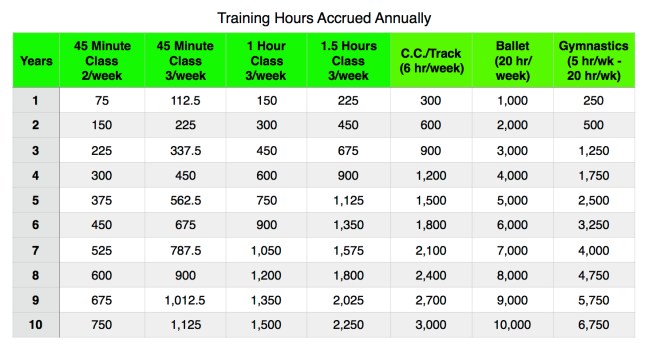
Each of my three daughters has their passion: one loves to run, one loves to dance, and the third loves gymnastics. Each has the same choice to make in pursuing these activities: is it a recreational hobby, or are they going to pursue EXCELLENCE? Each can choose to dabble in their “art” a few days a week. The runner can go out and put in her miles at her leisure, while the other two can attend recreational programs for just this purpose. Over time all three will reap the many benefits that come from such participation. However, at these levels, they will NEVER become experts in these endeavors.

The runner puts in 1+ hours of training six days a week during the on-seasons for high school track and cross-country, and tapers to an hour/day in the off-season. Experts in these fields train/compete through high school and college, which works out to around eight years. Then they put in additional time getting a degree or certification in order to coach. The ballerina puts in 20+ hours/week at the studio during the school year, and does an annual three-week intensive (six hour days/six days/week). By the time she’s considered an expert, she will have been training in this manner since sixth grade. The gymnast is currently just recreating a couple times a week. If she decides to pursue it, the competition team starts out at about 5 hours/week for her age, and builds up from there.

annual training comparison

The average karate/taekwondo school utilizing the standard twice a week, 45-minute class structure promotes students to Black Belt in three years. Throw in six months of Saturday morning intensives, and it’s still less than 500 hours total. Compare that to the 2,250 hours in Brazilian jiujitsu (1.5 hours @ 3/week for 10 years), the runner’s 3000, the gymnast’s 6,750, or the ballerina’s 10,000!

There’s nothing wrong with training martial arts a couple times a week. It’s a fun way to stay active, fit, and learn some cool stuff.  Just don’t confuse recreation with expertise. If  you seriously want to be a Black Belt, you can make it happen –  you’ve just gotta be willing to put in the work. Next week we’ll discuss our Brazilian Jiujitsu belt system, to give you a better idea of what it’s going to take.

See you on the mat.

Why My Daughters Train in BJJ

I am a father trying to do right by my children.

As parents, we want what’s best for our children. We do everything we can to make sure they’re loved, well fed, and have a roof over their head. We’re preparing them to be successful adults. We sign them up for gymnastics, music lessons, soccer, martial arts, little league, science camp, ballet, cheer, and swimming. We try to support and nurture their individuality when it’s in their best interest, but as the adult in the room, we’re left in the driver’s seat, and have to decide when it’s not.

Trying to sort through all these options and pick the best can be challenging. In addition to simple recreation, we look for the benefits; will this help my child be more fit, develop greater self esteem, or learn the value of teamwork? Part of our decision is based on the logistics of somehow getting to and from, in between school, work, and family time. Part of it is financial. While we’d love to give our progeny everything, the bottom line is, we are inevitably limited; there are only so many hours in a week, and only so many dollars in our wallets.

I am a martial artist biased by 35 years training, studying, and teaching.

I believe that martial arts is a “package deal,” providing a one-stop shopping experience for parents. When taught effectively, it is powerfully transformative, developing strength, flexibility, and cardio-vascular fitness, while also promoting valuable life lessons like integrity, self discipline, respect, focus, tenacity, and self esteem. A good martial art program can also provide it’s students with something other activities most definitely do not: self-defense. This full-package should make martial arts especially appealing to parents struggling with the decision of where to enroll their children.

There is one caveat, however: not all martial arts are taught effectively, and thus do not live up to the promise. Self-defense is one area in particular, where many programs fall short. It is a messy affair, and has much more to do with a state of mind than fancy techniques. An individual must be able to function under duress, and have an effective arsenal that will work consistently. To develop this a student needs to train in combat conditions regularly and consistently. It is simply not feasible for the general public to engage in full-contact sparring on a regular basis. Given the current awareness of the detrimental, long-term effects of repeated head trauma, the problem with children regularly punching and kicking one another in the head should be apparent.

However, in Brazilian Jiujitsu (BJJ), we can safely “roll” (spar) in every class. We learn a multitude of techniques, and have the regular opportunity to apply them against  opponents of varied shapes, sizes, and skill. This hones the fundamentals of BJJ, as well as our own individual “game.” These fundamentals work, regardless the circumstances. A smaller, weaker individual really can learn to control a larger, stronger aggressor. The intensity of this phase of training develops the mental fortitude that enables us to remain “calm” under pressure, to be able to fight through and survive often uncomfortable, seemingly untenable conditions. In this manner, our skills and our mental tenacity are forged in the fires of combat.

I am a biased father who’s daughters will be well-prepared for all of life’s challenges.

My oldest daughters have discovered their passions. (the jury’s still out for the third) Between school and pursuing these, there is little time left for martial arts. It’s currently my job to protect them, but that responsibility is quickly becoming their own. Brazilian Jiujitsu provides them the training they need, in the limited amount of time they have, to become sufficiently well-prepared for the unlikely specter of violence.

For most of us, the odds of being the victim of violence are small. (here’s some perspective) Indeed we’re much more likely to die in an automobile accident, or of heart disease, than to die from a violent crime. Just like those examples, we can improve our odds by being smart about the risks, and developing good habits – prevention truly is the best medicine. As discussed last week, while avoiding violence altogether is our best bet, given it’s critical nature, it only makes sense to be prepared for it none-the-less. The question we must ask ourselves is one of resource allocation. That is, how much time and energy should we devote towards preparing ourselves and our children?

See you on the mat.

What? I can’t hear you…

The Yin and the Yang – we’ve all seen the image; two interlocking circles appear to flow into one another, and at the same time are part of a larger circle. The Chinese Taijitu (太极图) dates back over a thousand years to the Song Dynasty.Yin yang

In the 1880’s what Koreans call Taegeuk (태극) was adopted into the South Korean National Flag.Flag of South Korea

Even as a little kid growing up in the far reaches of small-town Montana I had seen this symbol. It was on the box cars and cabooses of the Northern Pacific Railroad which ran near my house.Northern_Pacific_Railway_Logo,_November,_1952

One doesn’t have to be a Daoist to appreciate the meaning of the symbol. What a simple, yet powerful image of integrity – of “being whole and undivided,” or “being unified or sound in construction.” (Oxford Dictionary) The two opposing colors flow from, and into, one another, thereby creating the whole. Take away either part and you’re left with an incomplete, dysfunctional package. Imagine it as a tire on your car and you get the idea.1:2 yin:yang As Brazilian Jiujitsu practitioners, we’re continually working to refine our skill set. We learn offensive (yang) and defensive (yin) techniques. We also have to continually modify our “game” as we train with a diverse group of teammates. One can’t use the same strategy against a smaller, faster opponent that might be effective against a larger, stronger opponent. We must develop multiple “sides” to our game if we wish to be the best we can be.

“Don’t say things. What you are stands over you the while, and thunders so that I cannot hear what you say to the contrary.” – Ralph Waldo Emerson

Just as we work to round out our BJJ game, we should work to have integrity as a human being as well. Just as the Yin/Yang symbol is a combination of all it’s parts, we too are a product of all our parts. Our words should be consistent with what we think, otherwise, we’re simply lying. Our actions should match our words, or else we’re hypocritical. Our thoughts should be reflected in everything we say and do. In this manner, we strive to maintain our integrity.integrityvenndiagram

Ol’ Ralph W. Emerson got it right.

See you on the mat.

The Golden Rule

We’ve all heard it, or some derivation, before. “Do unto others as you would have them do unto you.”  The Golden Rule has been handed down through antiquity, from the ancient civilizations of Egypt, India, and Persia. It can be found, in some form or fashion, in every major religion or philosophy. People often adhere to it in the hopes of reciprocity, that is, “If I’m nice to you, you’ll be nice in return.” Parents and teachers use it to teach children empathy. I don’t know how many times I’ve caught myself asking my own daughters, “How would you like it if someone did that to you?”

It can also be a powerful tool in leadership.

Back in December, I blogged about Leading by Example, and mentioned the difference between being a boss and being a leader. It’s a common misconception that the two are synonymous. A boss is someone who’s position or title in an organization allows them to tell people what to do. They often have the power to reward and punish in order to enforce compliance. Being a leader, on the other hand, is much more than simply ordering folks around.

“The True Measure of Leadership is Influence – Nothing More, Nothing Less”

While there is no single trait that makes successful leaders, there are plenty of lists out there trying to boil it down to a manageable few. In his highly regarded bookJohn C. Maxwell discusses The 21 Irrefutable Laws of Leadership. One such law, The Law of Influence states, “The true measure of Leadership is influence – nothing more, nothing less.” An effective leader doesn’t need a title, nor leverage. They influence those around them to success. They inspire through word and through deed.

Which brings us back to The Golden Rule. If you truly wish to lead others, you must first lead the way. Telling them what to do just doesn’t have the impact that showing them does.

If you want others to treat you with respect, treat people respectfully.

If you want others to work hard, then work hard.

If you want others to be honest, then always tell the truth.

If you want others to be patient, then be patient.

Whether as a teacher, or as a parent, it’s important to remember that this leading by example thing can go both ways. I don’t know how many times I’ve witnessed one of my daughters do something, only to realize exactly where it came from. Be prepared for your students/children to reflect both your best and worst traits.

If you’re impatient, don’t be surprised when your student/child is impatient.

If you’re inconsiderate of others, expect your student/child to be inconsiderate of you.

If you lose your temper, get ready for your child’s tantrum.

If you have unhealthy eating/exercise habits…

As martial artists, we have the power to better our lives, and the lives of those around us. We can inspire one another to greater success on and off the mat. Consider all of the people we get to train with. Who is the most enjoyable to train with? Who is the most helpful or inspiring, and why? What kind of a training partner are you?

See you on the mats!

Potluck

Everybody loves a good potluck; the chance to get together with friends and family, and chow down on a smorgasbord of food. Inevitably, there’s the full spectrum of socializing and gastronomy. You’ve got the comfort of your immediate family, and friends that might as well be, to the joy in catching up with those you haven’t seen in ages, and the intrigue in getting to know new acquaintances. The food ends up being just as diverse, with all sorts of appetizers, meats, casseroles, salads, desserts, etc., from wanna-be chefs bringing in their house specialties, to the store-bought vegetable tray, to the bag of potato chips.

Brazilian Jiujitsu is kind of like a potluck.

When we go to class, there are going to be those who we see every time we go. There’s a comfortable camaraderie within this group, as we become like brothers and sisters over time. We know what everybody’s signature dish is. We know one another’s strengths and weaknesses and are prepared to avoid or to counter each other’s favorite submissions and strongest positions. Each consecutive roll builds off of the last, almost as though we’d never parted.

Of course, there are those who we don’t see as often, like distant cousins with whom we’ve got some “catching up” to do. The conversation might start off a bit tentative, but it doesn’t take long to get into the thick of it. These rolls can provide some fresh surprises, as surely we’ve both grown since our last “get-together.”

Finally, there are the new-comers. The folks we’ve not met before, or know very little about. It is up to us to welcome these people into our tribe, and nurture these relationships. We all remember what it was like when we first started; how steep that initial learning curve was. Get to know them. Show them the ropes. We want them to become like part of the family.

The thing that makes a potluck truly successful is the combined effort of everybody involved. We need the amazing specialty dishes, the vegetable trays, and the bags of chips; otherwise, it’s going to be a pretty boring meal. If too many folks show up empty-handed, or don’t show up at all, somebody is going to go hungry. When each individual brings his or her contribution to the event, however, everybody wins. There’s plenty of good stuff to go around, and each of us gets what we need.

What are you bringing to the potluck?

See you on the mats.


Are You Comfortable?

I recently came across a blog written by another student of Brazilian Jiujitsu. Grips & Growls chronicles his journey. Anybody already living the BJJ lifestyle will be able to relate. For those considering trying Brazilian Jiujitsu for the first time, his is a fresh perspective from one who has just recently begun. One particular post entitled “Sweaty Floor Karate,” hit upon a key concept of our art.

When you’re comfortable being uncomfortable for a hobby, everything else gets easier.

Let’s face it. We all enjoy the good things in life. We glory in the opportunity to sleep in, look forward to the chance to just sit on the couch and “veg,” and spend our weekdays anticipating a weekend at the lake, or a night out on the town. Daily, we are tempted to just hang out at the local coffee shop. While we’re at it, we can snack on a Snickers® bar, have a soda with lunch, and a little cheesecake for dessert.

While there’s nothing wrong with enjoying any of these from time to time, too much of a good thing is, simply stated, too much.

Consider as well all of the technology we’re surrounded by, and for the most part, take for granted. It was all designed with the intent to make life easier. There are planes, trains, and automobiles that get us where we’re going. Flip a switch and we have lights. Push a button and we have air conditioning. Push another and we change the channel. Turn a dial and we’re mixing, juicing, and cooking our food. We can open and close the garage door without ever leaving our car. Indeed, with a few thumb clicks and swipes on our smartphone, we can do just about anything, without ever leaving our home!

Remember the people aboard the spaceship Axiom in the movie WALL-E?

Our modern, suburban lifestyle provides us with ready access to every luxury imaginable, and an environment nearly free from discomfort. However, all of this easy living has a downside: it makes us weak. Just like the poor folks abroad the fictional ship Axiom, such a lifestyle can leave us ill-prepared to deal with adversity.

There are moments in our lives that can be less than pleasant. Taking an exam in school, applying for a job, and speaking in front of a large audience are some common examples. Avoiding them isn’t always an option, and oftentimes it isn’t in our best interest to do so. A successful test score, job interview, or presentation could lead to a vast improvement in our lives in the form of college placement, employment, or a promotion. These are times when being able to remain confident, calm, and clear-headed can enable us to effectively deal with the circumstances. (Let’s call these the three C’s of being comfortable.)

Learning to be comfortable being uncomfortable is fundamental to the transformational power of Brazilian Jiujitsu.

There’s nothing quite like having a larger, stronger training partner who has gained a superior position to help us understand the importance of the three C’s. In this circumstance, it is guaranteed you are going to be uncomfortable. As the pressure they apply smashes you into the mat, it gradually becomes harder to breath, with each consecutive breath a bit more shallow than the last.

The beauty of Brazilian Jiujitsu is that there’s a way out. If you can stay calm and clear-headed enough to remember your technique, and then execute confidently, you can escape. Not only that, but it can become a total reversal of fortune. It is an exhilarating experience to escape, improve your position, and then submit the person who was smashing you moments before.

Brazilian Jiujitsu is physically and mentally taxing. It pushes us to our limits. This is what makes it so powerful. The confidence gained radiates into every aspect of our being. After training with our teammates, everything else appears less intimidating. Any anxiety regarding an upcoming exam, job interview, or public speaking engagement is more manageable. We can look life’s challenges in the eye and say, “is that all you’ve got?” Our training enables us be confident, calm, and clear-headed when facing adversity.

We can be comfortable being uncomfortable.

See you on the mats.